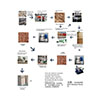
Building an efficient biomass pellet plant requires a clear understanding of the Wood Pellet Production Line Flowchart
Whether you are processing raw timber, branches, sawdust, or agricultural residue like rice husk, this step-by-step breakdown explains how a turnkey biomass plant functions
1. Raw Material Preparation & Chipping (Wood Chipper)
The pelletizing process starts with wood raw material such as round logs, tree trunks, and large wood blocks
Equipment: Drum Wood Chipper / Disc Wood Chipper
Process: Heavy-duty wood chippers reduce large timber into uniform large wood chips
. Note: If raw materials exceed 20% moisture content, chips can pass through a preliminary tumble dryer before secondary crushing
.
2. Secondary Crushing & Pulverizing (Wood Shredder)
Large wood chips cannot enter the pellet press directly
Equipment: Wood Shredder / Wood Crusher / Hammer Mill
Process: The wood shredder breaks down wood chips into fine sawdust, preparing the material for uniform drying and pellet extrusion
.
3. Sawdust Drying System (Moisture Control)
Moisture content is critical in biomass pellet production. Optimal moisture for pelletizing is 10%–15%
Equipment Options:
Tumble Dryer for Wood Chips (Rotary Drum Dryer): Ideal for large-capacity plants and high-moisture raw materials (>15%)
. Pipeline Sawdust Dryer (Airflow Dryer): Suitable for small-to-medium production lines with lower initial moisture
.
Direct Feeding Shortcut: If your raw material is fine sawdust or rice husk with moisture already around $\le 15\%$, it can skip the drying system and be fed directly into the wood granulator machine
.
4. Pelletizing Core Section (Wood Granulator Machine / Pellet Mill)
This is the most critical stage in the entire production line
Equipment: Vertical Ring Die Wood Pellet Machine (also widely known as Wood Granulator Machine or Sawdust Pellet Mill)
Process: Under high pressure and temperature generated by the ring die and roller shell, lignin inside the sawdust softens and acts as a natural binder. The raw material is extruded through the die holes to form dense, smooth wood pellets
.
5. Cooling & Dust Screening (Wood Pellet Cooler)
Freshly extruded wood pellets emerge from the granulator at high temperatures ($70^\circ\text{C} - 90^\circ\text{C}$) and contain residual moisture
Equipment: Counterflow Wood Pellet Cooler
Process: Air cooling reduces pellet temperature close to ambient conditions and hardens the pellets, improving mechanical durability for storage and long-distance transport
.
6. Automatic Packaging (Wood Pellet Packaging Machine)
The final step prepares the biomass fuel for commercial sale or bulk distribution
Equipment: Automatic Bagging Machine / Ton-bag Packaging System
Process: Cooled pellets are automatically weighed, bagged, and sealed
. The finished bagged products are stacked on pallets, ready for logistics .
Key Takeaway for Line Configuration
As indicated in the Wood Pellet Production Line Flowchart, exact equipment configuration depends heavily on your raw material type, moisture content, and target hourly capacity
High Moisture Wood Logs: Chipper $\rightarrow$ Tumble Dryer $\rightarrow$ Shredder $\rightarrow$ Wood Granulator Machine $\rightarrow$ Cooler $\rightarrow$ Packing
Dry Sawdust / Agricultural Waste ($\le 15\%$ moisture): Wood Granulator Machine $\rightarrow$ Cooler $\rightarrow$ Packing
Investing in high-grade ring die technology and robust drying solutions ensures maximum operational efficiency and long service life for your biomass pellet enterprise