As global demand for renewable energy continues to rise, wood pellets remain one of the most widely used biomass fuels for industrial boilers, residential heating systems, and biomass power plants. For investors planning to enter the biomass fuel industry, one of the most common questions is:
How much does a wood pellet production line cost in 2026?
The answer depends on several factors, including production capacity, raw material characteristics, automation level, equipment configuration, and installation requirements.
Whether you are planning a small-scale wood pellet plant or a large industrial biomass pellet manufacturing facility, understanding the main investment costs is essential before making a purchasing decision.
Wood Pellet Production Line Cost Overview
The cost of a wood pellet production line can vary significantly depending on project scale and equipment specifications.
| Production Capacity | Estimated Equipment Cost |
|---|---|
| 200-500 kg/h | $3,000-$5,000 |
| 500-1,000 kg/h | $5,000-$15,000 |
| 1-2 TPH | $3,000-$50,000 |
| 2-5 TPH | $50,000-$80,000 |
| 5-10 TPH | $80,000-$100,000 |
| 10+ TPH | $100,000-$150,000+ |
These estimates typically cover the production equipment itself and are intended for preliminary budgeting purposes. Actual project costs may vary based on supplier, machine specifications, local labor costs, installation requirements, and market conditions.
A complete turnkey wood pellet manufacturing plant usually involves additional expenses, including:
- Factory buildings
- Land acquisition
- Civil construction
- Transportation
- Installation
- Electrical systems
- Taxes and duties
- Working capital
For this reason, investors should always clarify whether a quotation covers only a wood pellet machine or an entire wood pellet production line.
What Equipment Is Included in a Wood Pellet Production Line?
A complete wood pellet plant consists of several processing stages.
Wood Chipper and Hammer Mill
Raw materials such as logs, branches, wood waste, and wood chips often require size reduction before pelletizing.
A typical preparation system may include:
- Drum Chipper
- Disc Chipper
- Hammer Mill
- Conveying Equipment
If the raw material is already fine sawdust, investors may significantly reduce equipment costs by eliminating certain crushing stages.
Wood Dryer
Moisture content directly affects pellet quality and production efficiency.
Most wood pellet manufacturing plants require the moisture content of raw materials to be reduced to approximately 8%-15% before entering the pellet mill.
Common drying equipment includes:
- Rotary Drum Dryer
- Three-Pass Dryer
- Airflow Dryer
Drying systems often account for a large portion of total project investment due to fuel consumption and auxiliary equipment requirements.
Wood Pellet Mill
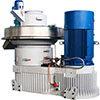
The wood pellet mill is the core machine of the entire production line.
Its function is to compress biomass materials through a die under high pressure to form dense cylindrical pellets.
Common pellet mill types include:
Flat Die Pellet Mill
Suitable for:
- Small-scale production
- Farm use
- Pilot projects
Ring Die Pellet Mill
Suitable for:
- Commercial production
- Industrial pellet plants
- Continuous operation
The wood pellet machine price is affected by:
- Motor power
- Die diameter
- Production capacity
- Machine materials
- Automation level
- Brand reputation
Cooling, Screening and Packaging
Fresh pellets are hot and contain residual moisture.
A complete finishing system may include:
- Counterflow Cooler
- Vibrating Screen
- Automatic Packing Machine
- Bulk Loading System
These systems improve pellet quality and facilitate transportation and storage.
Example Cost of a 1 TPH Wood Pellet Plant
A typical 1 ton per hour wood pellet production line may include:
- Hammer Mill
- Rotary Dryer
- Ring Die Pellet Mill
- Pellet Cooler
- Pellet Screener
- Packing Machine
Estimated investment:
$80,000-$150,000
Depending on:
- Raw material condition
- Automation level
- Optional accessories
- Local installation costs
Such plants are popular among small and medium investors due to their relatively low capital requirements and manageable operating costs.
Example Cost of a 5 TPH Wood Pellet Production Line
A 5 ton per hour wood pellet manufacturing plant generally includes:
- Wood Chipper
- Hammer Mill
- Rotary Dryer
- Buffer Silo
- Multiple Pellet Mills
- Cooling System
- Screening System
- Automatic Packaging Line
- Dust Collection System
Estimated investment:
$250,000-$700,000
The final budget depends heavily on equipment quality, automation level, and site conditions.
This scale is often selected by investors targeting industrial fuel markets or long-term biomass fuel supply contracts.
Main Factors Affecting Wood Pellet Plant Investment
1. Raw Material Type
Different biomass materials require different processing methods.
Examples include:
- Sawdust
- Wood chips
- Forestry residues
- Bamboo
- Straw
- Agricultural waste
Materials with larger particle sizes or higher moisture content generally require more pre-processing equipment.
2. Production Capacity
Capacity is one of the most significant cost drivers.
Larger plants require:
- More powerful pellet mills
- Higher-capacity dryers
- Larger conveyors
- Larger electrical systems
However, larger facilities may achieve lower equipment costs per ton of installed capacity.
3. Automation Level
Automation influences both investment costs and operating efficiency.
Semi-automatic plants:
- Lower initial investment
- Higher labor requirements
Fully automatic plants:
- Higher capital expenditure
- Lower labor costs
- Better production consistency
- Easier process control
4. Energy Consumption
Electricity and thermal energy consumption directly affect operating costs.
When comparing suppliers, investors should evaluate:
- Power consumption
- Expected output
- Maintenance requirements
- Spare parts costs
Instead of focusing solely on purchase price.
5. Installation Location
Project location can significantly affect investment due to:
- Transportation costs
- Customs duties
- Local regulations
- Electrical standards
- Labor costs
Is a Wood Pellet Production Line Profitable in 2026?
The profitability of a wood pellet plant depends on several factors:
- Raw material cost
- Pellet selling price
- Electricity consumption
- Labor costs
- Transportation expenses
- Equipment utilization rate
For example, a pellet plant with stable access to low-cost sawdust may achieve substantially higher profitability than a plant relying on expensive purchased raw materials.
Successful projects typically focus on:
- Stable raw material supply
- Reliable pellet quality
- High equipment uptime
- Long-term customer contracts
Rather than simply pursuing larger production capacity.
How to Reduce Wood Pellet Production Costs
Investors can improve project economics by:
Choose Appropriate Capacity
Do not over-invest in equipment beyond realistic market demand.
Utilize Local Raw Materials
Short transportation distances can significantly reduce costs.
Optimize Equipment Configuration
Avoid purchasing machines that are unnecessary for your specific raw materials.
Compare Complete Solutions
Evaluate:
- Energy consumption
- Spare parts availability
- Service support
- Warranty coverage
Instead of comparing pellet mill prices alone.
Frequently Asked Questions
How much does a 1 ton per hour pellet plant cost?
A complete 1 TPH wood pellet production line generally costs between $80,000 and $150,000, depending on equipment configuration and raw material requirements.
What is the price of a wood pellet machine?
The price of a wood pellet machine varies widely according to capacity and design. Small flat die machines may cost several thousand dollars, while industrial ring die pellet mills can cost tens of thousands of dollars or more.
Can sawdust be used directly for pellet production?
In many cases, yes. If sawdust has an appropriate particle size and moisture content, it may bypass certain crushing stages, reducing investment costs.
How much electricity does a pellet plant consume?
Power consumption varies with production capacity and equipment configuration. Larger plants generally consume more electricity but may achieve better efficiency per ton of finished pellets.
Is a wood pellet business profitable?
A wood pellet business can be profitable when raw material costs are controlled, equipment operates reliably, and stable sales channels are established.
How to Choose the Right Wood Pellet Production Line
Before purchasing equipment, investors should consider:
- What raw materials will be processed?
- What is the moisture content of the raw materials?
- What production capacity is required?
- What investment budget is available?
With this information, an experienced manufacturer can recommend a suitable wood pellet plant configuration and provide a detailed quotation.
Conclusion
The cost of a wood pellet production line in 2026 can range from less than $20,000 for a small setup to more than $1.5 million for a large industrial biomass pellet manufacturing plant.
The final investment depends on production capacity, raw material characteristics, automation level, installation requirements, and local operating conditions.
Rather than focusing solely on equipment price, investors should evaluate the complete project, including energy consumption, maintenance costs, product quality, and expected return on investment.
Looking for a Customized Wood Pellet Production Line?
To receive a professional equipment recommendation and detailed quotation, please provide:
✅ Raw material type
✅ Moisture content
✅ Target production capacity
✅ Installation country
✅ Available investment budget
Our engineers can design a customized wood pellet production solution tailored to your production goals and local operating conditions.