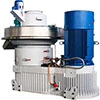
Investing in biomass energy equipment requires thorough planning and strategic evaluation. A successful biomass setup depends not only on selecting the main processing engine—such as a high-performance wood granulator machine—but also on configuring the complete auxiliary production chain and establishing a reliable long-term maintenance strategy.
Before making a purchasing decision, here is a detailed preparation guide covering site requirements, auxiliary equipment integration, and key technical factors.
1. Raw Material Assessment and Processing Requirements
Understanding your raw material properties (moisture content, particle size, and wood density) is the foundation of line configuration:
Size Reduction:
Raw timber, wood logs, or large branches cannot feed directly into a pelletizing system. They must first pass through a heavy-duty wood chipper machine and a high-efficiency hammer mill equipment to reduce particles to the optimal 2–5 mm size. Moisture Control: Biomass materials typically need a moisture level of 10% to 15% for optimal binder-free compression.
If raw wood humidity is higher, integrating an industrial rotary drum dryer for sawdust into your line is essential.
2. Planning the Full Production Line Equipment
A complete pellet production line requires a continuous workflow. Beyond the central wood granulator machine, the layout should include:
Pre-processing Unit: heavy-duty wood chipper machine, high-efficiency hammer mill equipment, and an industrial rotary drum dryer for sawdust.
Pelletizing Core: industrial ring die pellet mill or flat die pellet press machine depending on capacity requirements.
Post-processing Unit: counterflow pellet cooler machine (to drop hot pellet temperatures from 80°C to ambient levels), vibrating pellet screening machine (to separate dust and fines), and an automatic pellet packing machine.
Conveyor System: belt conveyor system for biomass and bucket elevator for pellet plant to ensure stable, automated material transfer throughout the line.
3. Evaluating After-Sales Support and Maintenance Services
Long-term operating stability relies on robust manufacturer support and component availability. Key maintenance considerations include:
Wearing Parts: High-friction components like ring dies and press rollers require regular replacement.
Confirm the supplier provides wood pellet machine ring die replacement parts and pellet mill press roller shell replacement with quick dispatch options. Technical & On-site Support: Verify whether the manufacturer offers pellet plant installation and commissioning service, wood pellet machine technical support and troubleshooting, and biomass pellet machine spare parts availability.
Preventive Maintenance: Ensure access to guidance on pellet mill die and roller gap adjustment service, wood pellet machine gearbox maintenance, and emergency repair service for wood pellet plant to minimize costly downtime.
4. Operational Checklist Before Purchase
Before finalizing contracts with equipment suppliers, confirm the following site conditions:
Power Infrastructure: Verify that transformer capacity supports total motor wattage, including auxiliary drives and conveyors.
Site Layout & Height: Ensure sufficient clearance for vertical equipment, such as dryers, bucket elevators, and cooling towers.
Environmental Compliance: Confirm dust collection systems (e.g., bag filters or cyclones) meet local air quality standards.
Evaluating material prep, line design, and post-purchase support helps lower operational risks and ensures long-term return on investment.