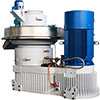
Scrolling through endless listings for biomass equipment can feel a bit overwhelming. Whether you are setting up a small-scale heating setup for your workshop or ramping up a commercial biomass fuel business, finding the right wood pellet mill is arguably the most critical decision you will make.
The market is flooded with options ranging from ultra-cheap imports to heavy-duty industrial machinery. But here is the catch: "cost-effective" does not mean buying the cheapest machine on the page. True value lies in a sweet spot where durability, energy efficiency, output capacity, and initial investment intersect seamlessly.
If you are wondering how to navigate the choices without wasting your hard-earned money, let's break down what actually matters when shopping for a reliable biomass pellet machine.
1. Match the Machine to Your Raw Materials
One of the most common mistakes buyers make is assuming every pellet press handles raw materials the exact same way. Before looking at price tags, take a close look at what you will actually be feeding into the machine.
Wood species: Hardwoods like oak and maple require more compression force and wear down components faster than softwoods like pine.
Moisture content: Ideally, your feedstock should sit right around 10% to 15% moisture. If your material is too wet or too dry, even an expensive machine will struggle, leading to clogged dies and frustrating downtime.
Particle size: Sawdust is usually ready to go, but if you are working with wood chips or agricultural stalks, factor a wood crusher or hammer mill into your initial budget.
Choosing a wood pellet mill that is poorly matched to your specific raw material is a fast track to high maintenance costs, completely wiping out any initial savings on the purchase price.
2. Flat Die vs. Ring Die: Understanding the Mechanics
When you start comparing designs, you will quickly notice two main categories: flat die and ring die pellet mills. This mechanical choice dictates both your upfront investment and long-term operating costs.
Flat Die Pellet Mills: These are generally more compact, budget-friendly, and much easier to operate and maintain. If you are a beginner, a small-scale flat die wood pellet press is usually the go-to recommendation. They are brilliant for home use, small farms, or startup businesses producing a few hundred kilograms per hour.
Ring Die Pellet Mills: Built for heavy-duty, continuous commercial production. They offer higher output, better cooling during compression, and longer die life. However, they come with a much steeper price tag and require more technical know-how to service.
If you are running a tight startup budget, don't overbuy. A quality flat die machine can deliver incredible value and ROI before you ever need to upgrade to heavy industrial ring die systems.
3. Look Beyond the Price Tag: Total Cost of Ownership
When hunting for a truly cost-effective wood pellet machine, you need to look at the big picture rather than just the shipping invoice. Three hidden factors dictate your actual expenses over time:
Energy Consumption: A motor that constantly draws excessive power will quietly drain your profits month after month. Look for energy-efficient motors with copper windings that balance output performance with reasonable electricity usage.
Wear and Tear (Dies and Rollers): The die and rollers are sacrificial parts; they will wear out. Check the material quality (alloy steel vs. carbon steel) and find out how easy—and affordable—it is to source replacement parts from the manufacturer.
Build Quality and Weight: In the manufacturing world, weight often equates to durability. A flimsy, lightweight machine will vibrate excessively, leading to premature bearing failure and structural cracks under high pressure.
Final Thoughts: Making Your Decision
At the end of the day, investing in a cost-effective wood pellet mill comes down to balancing your actual production goals with realistic equipment specifications. Don't get sucked into flashy marketing claims of impossible hourly outputs. Instead, read user reviews, talk directly to suppliers about after-sales support and spare parts availability, and choose a machine that matches your operational scale.
By taking a measured, thoughtful approach, you will secure a reliable workhorse that keeps your fuel production smooth and your budget intact for years to come.